The Telegraph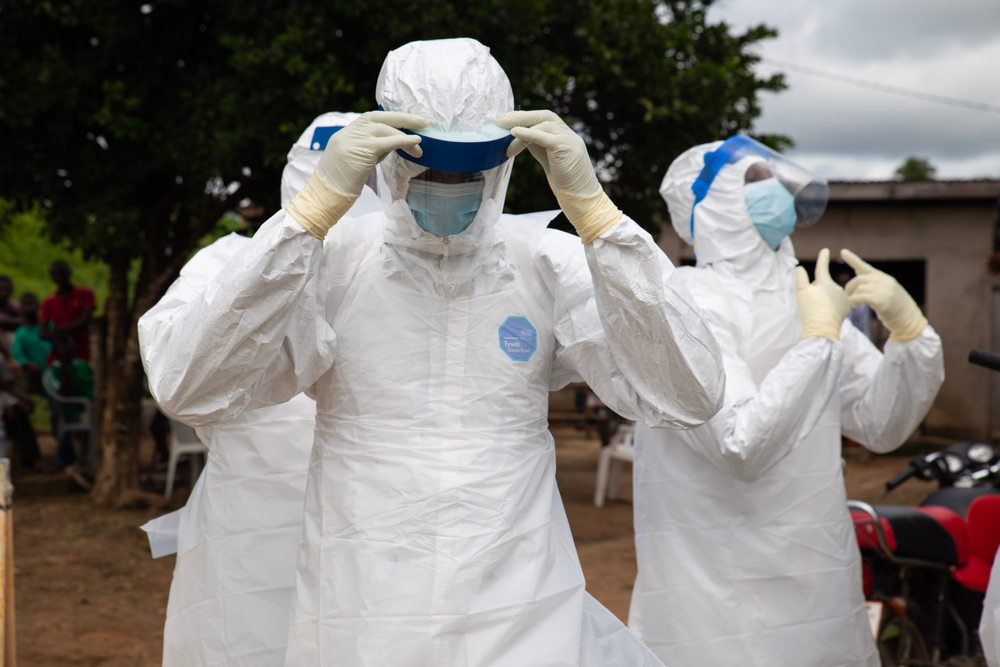
Addis Ababa – The Africa Centres for Disease Control and Prevention (Africa CDC) acknowledges the recent Level 4 “Do Not Travel” advisory issued by the U.S. government concerning the DRC.
Furthermore, the U.S. has enacted entry restrictions on non-U.S. passport holders who have traveled to the DRC, Uganda, and South Sudan recently.
In a statement released on Tuesday, 19 May 2026, Africa CDC noted that the U.S. has been a long-standing and valuable partner in fields such as disease surveillance, emergency response, workforce development, and global health security.
As of 18 May 2026, there have been around 395 suspected cases and 106 fatalities reported in the DRC, mainly in the Mongwalu, Rwampara, and Bunia Health Zones, along with two cases and one death in Kampala, Uganda.
Ebola, a devastating disease, spreads through direct contact with bodily fluids from infected individuals, contaminated items, or the remains of individuals who carried the virus.
To effectively break the transmission cycle, essential measures include early detection, timely isolation and treatment, contact tracing, infection prevention and control, community involvement, and safe, dignified burials.
Since the outbreak’s onset, Africa CDC has consistently disseminated information to Member States, partners, the media, and the global community, receiving over 1,600 mentions in international media referencing Africa CDC data and technical updates.
Africa CDC acknowledges the U.S. government’s advisory and entry restrictions for non-U.S. passport holders who have recently been in the DRC, Uganda, or South Sudan.
The agency respects each government’s sovereign duty to protect the health and security of its citizens.
“Our concern is not with the intention to protect populations, but with the use of broad travel restrictions as a primary public health strategy during outbreaks,” stated Africa CDC.
“Public health measures should be based on scientific evidence, proportionality, transparency, international cooperation, and adherence to international health regulations.”
Africa CDC firmly believes that generalized travel restrictions and border closures do not solve outbreaks.
Such measures can induce fear, damage economies, hinder transparency, complicate humanitarian efforts, and drive movement to unmonitored paths, ultimately raising public health risks.
“The fastest way to safeguard all nations is to robustly support outbreak control at the source,” stated H.E. Dr. Jean Kaseya, Director General of Africa CDC.
“Global health security cannot be attained solely through borders—true collaboration, trust, scientific engagement, and swift investments in preparedness and response capabilities are essential.”
The ongoing Ebola outbreak highlights a deeper structural injustice in global health innovation: the Bundibugyo Ebolavirus was identified nearly two decades ago, yet there are no licensed vaccines or treatments available for this strain today.
Africa CDC contends that had this disease predominantly impacted wealthier regions, medical countermeasures would likely have been developed by now.
A similar pattern was observed during the West African Ebola outbreak, where solutions were only found after an American doctor was infected, while thousands of Africans perished without assistance.
We must not repeat this error.
The PHECS declaration on 18 May 2026, available on the Africa CDC Official Website, aimed to mobilize political leadership, resources, and coordinated continental action.
This is not a call for panic, but rather a plea for solidarity, immediacy, and shared accountability.
Africa CDC urges heightened international support for:
- Improved cross-border preparedness and regional coordination;
- Ongoing support for frontline health workers and Ministries of Health;
- Strengthening risk communication and effective community engagement;
- Expansion of Bundibugyo Ebolavirus laboratory diagnostics and genomic sequencing;
- Deployment of epidemiologists and emergency response specialists;
- Increased funding for surveillance, logistics, infection prevention, and case management, including the ability to isolate cases and conduct dignified burials;
- Accelerated development of vaccines, diagnostics, and treatments for all Ebola strains;
Africa CDC is fully mobilized to support the DRC, Uganda, South Sudan, Rwanda, and all Member States at risk.